Running Made Clear is the visual guide from your first run to your first 5K or 10K. One route, five simple tools, and a numbered source behind every research finding. Easier than you think.
19 USD launch price · PDF · 30-day refund · free updates
Get the book - 19 USD
You've thought about it for a while. Maybe it was a doctor's comment, a flight of stairs that felt longer than it used to, or just a long winter at a desk. You've even tried once. You ran to the end of the street, your lungs burned, your face went red, and somewhere a voice said running is for runners.
Then the internet made it worse. One video says run every day, the next says you need a coach, a watch and a plan before you start. Your uncle says it will wreck your knees. A forum says anything over 30 minutes for 5K is a jog. Your shins ache in week three and you can't tell whether to rest, run or give up.
None of that means you're not built for it. It means nobody gave you the route.
Why this book is different
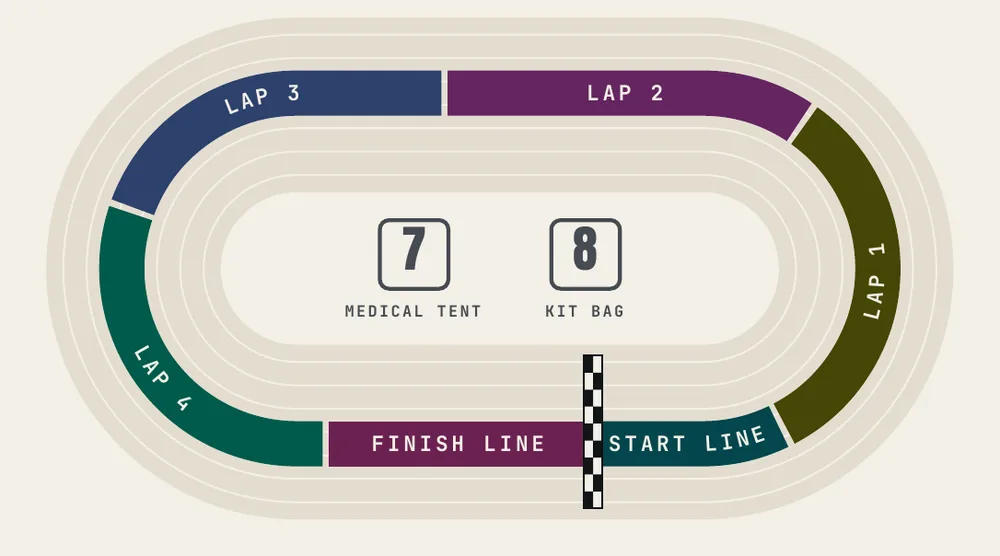
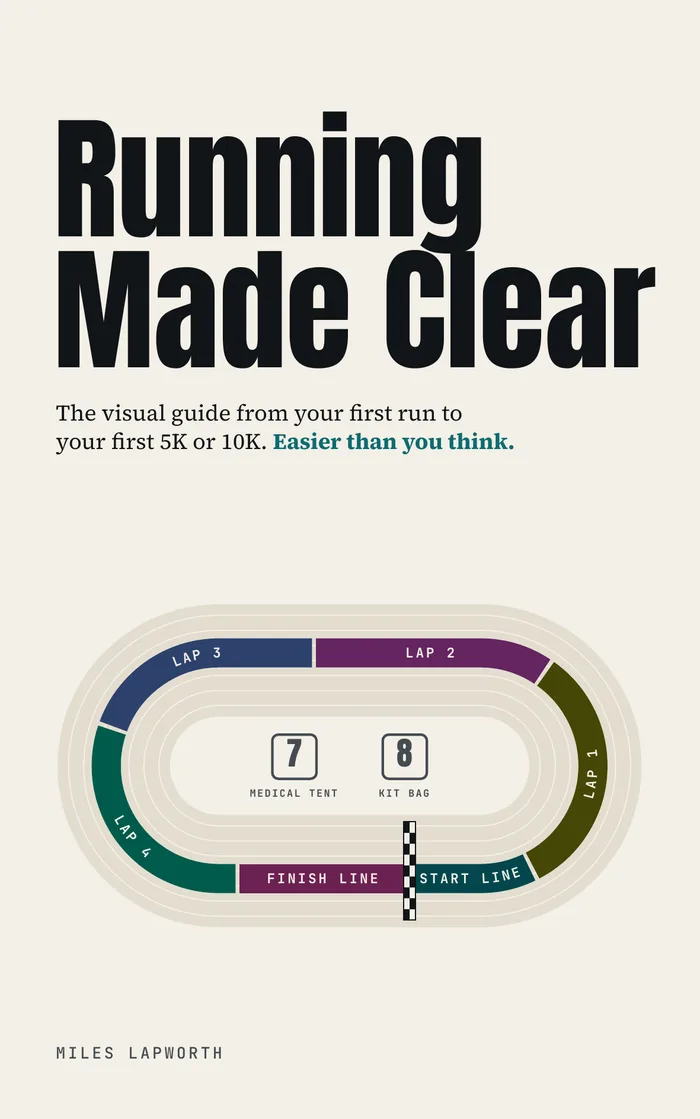
You can find answers to every running question for free. What you can't find for free is the order. Running Made Clear turns the first months into one race on a stadium. You start at the start line, run four laps and cross a finish line, while the medical tent and the kit bag wait in the infield whenever you need them.
Inside the book
| Start line | Why it's worth it, the knee question, a two-minute health check, what to buy and what can wait, a first goal |
|---|---|
| Lap 1 · First steps | Your first runs with walking breaks, how hard, how often, and why the first ten minutes feel awful |
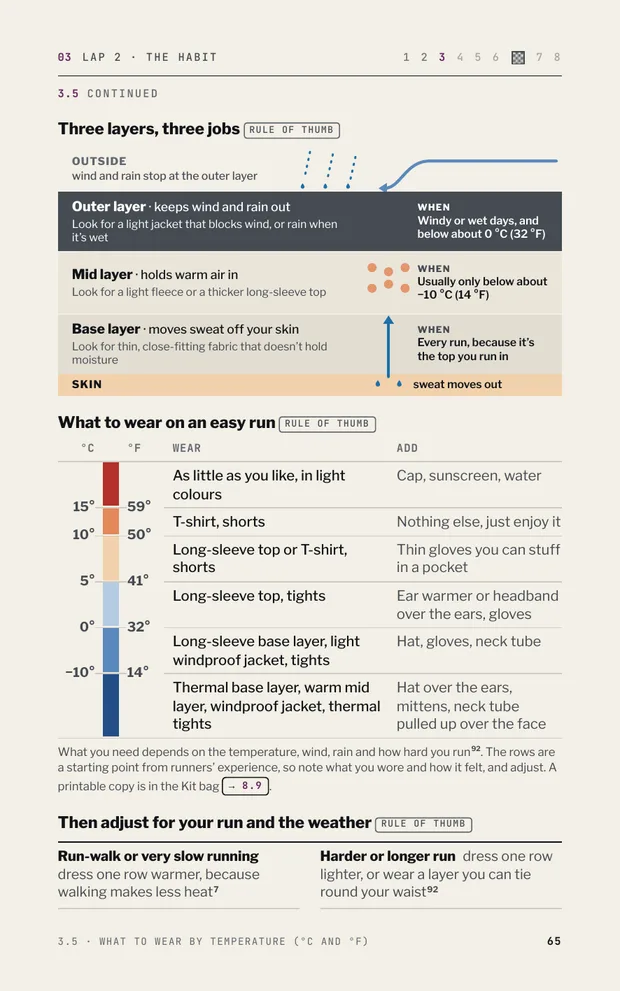
| Lap 2 · The habit | Keeping it going, sore or injured, what to wear in every weather, food and sleep around runs |
| Lap 3 · Getting stronger | Easy running and the 80/20 rule, heart rate and zone 2, how fast to build up, 15 minutes of strength |
| Lap 4 · Beyond 30 minutes | New kinds of runs, choosing a plan or an app, running and weight, kit upgrades, motivation dips |
| Finish line | Your first 5K or 10K, from choosing an event to the night before, the day itself and what comes next |
| Medical tent | Aches, illness, heat and when to stop, with clear signs for when to get help |
| Kit bag | Printable tools and quick answers, plans, checklists and a question finder |
Swipe →


What you get
The author
Proof without reviews
Every research finding and health guideline in the book has a numbered source in the list at the back, about 290 in all. Sources were chosen in this order - systematic reviews and meta-analyses first, then position statements and guidelines from medical and sports bodies, then single studies and established coaching books. Blog posts appear only for practical topics such as kit care and race logistics.
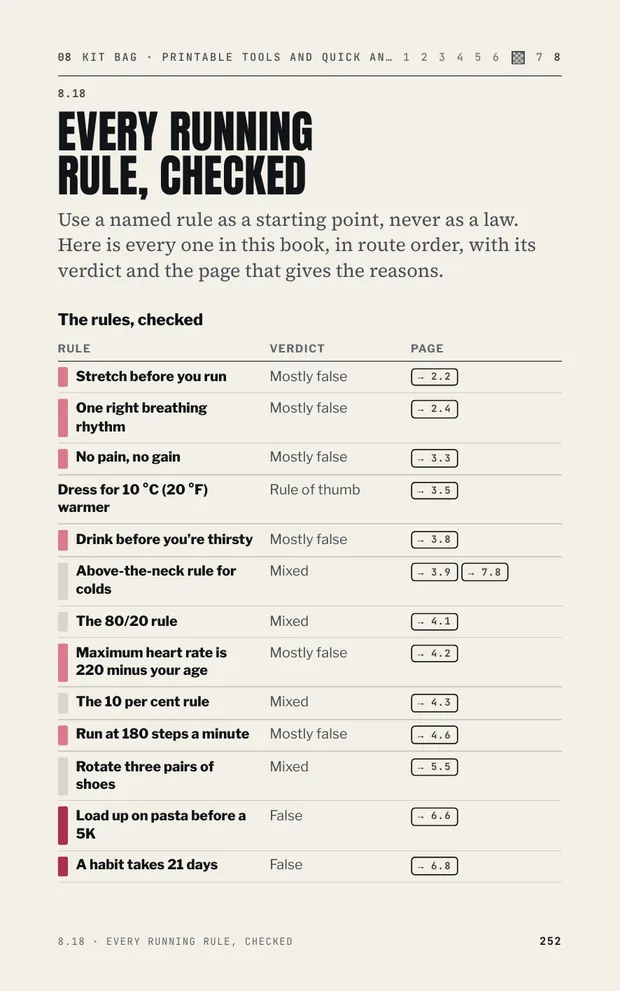
Where the research is mixed or thin, the page says so. Claims carry a How sure we are mark - Mostly true, Mixed, Mostly false or False - and a number that comes from practice rather than research carries the RULE OF THUMB mark.
Each section was checked in separate passes for facts, safety wording, language, layout and consistency, apart from the writing. The safety advice follows the same urgency levels everywhere.
If you find a mistake, write to [email protected]. Corrections go into the next free update and onto the dated changelog.
See for yourself, free
The full contents, how the book works, the knees section, a full section with its Field note and a printable card. We'll send the PDF to your inbox.
The offer
Running Made Clear · 269-page visual PDF · five tools with printable cards · 5K and 10K plans · free updates
19 USD launch price
Get the book - 19 USDSecure checkout by Payhip. [payment methods enabled in Payhip]. [VAT included / plus VAT where it applies].
30-day refund, plain and simple. If the book isn't for you, email [email protected] within 30 days of buying and you get your money back. You don't have to explain or prove anything.
Questions
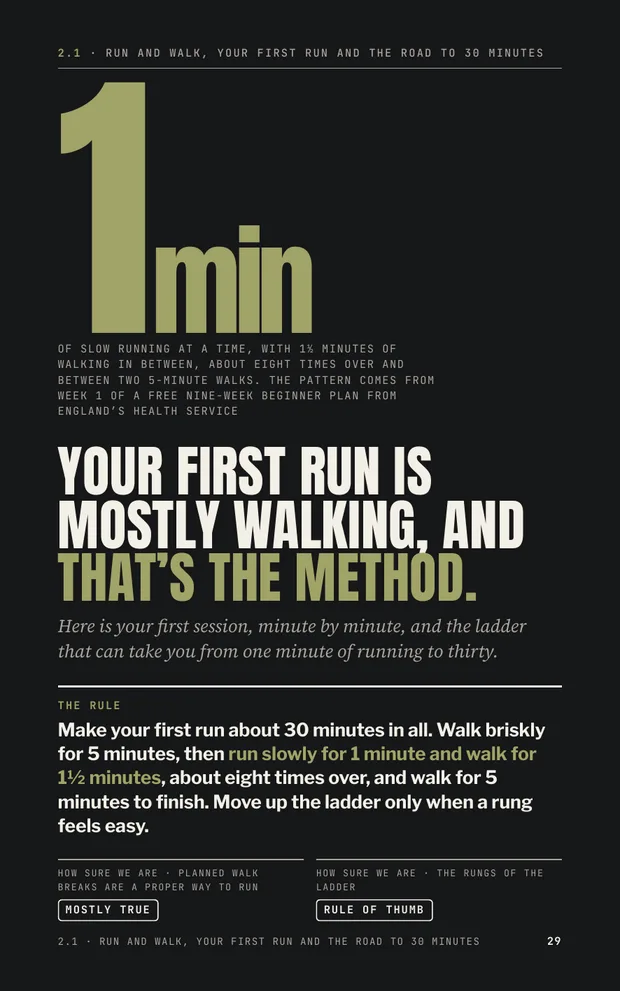
Yes, that's who it's written for. Your first session is mostly walking, and the section for people who are heavier, older or starting again says to start lower than you think and stay on each step longer. If brisk walking for 30 minutes is still hard, the book says walk first and run later.
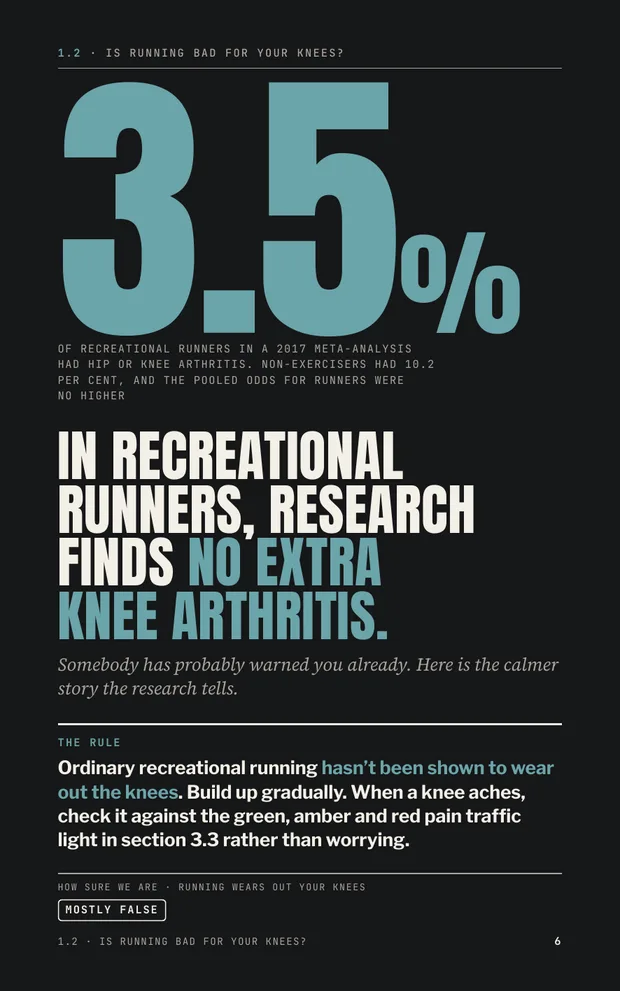
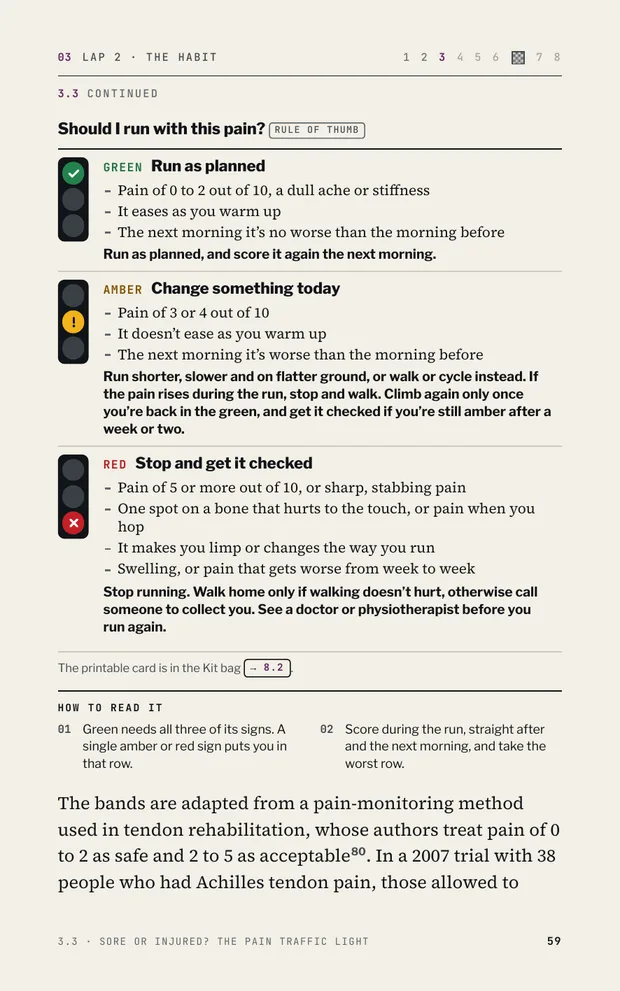
For recreational runners, the research finds no extra knee arthritis. The book explains what that research can and can't show, and how to build up gradually so your knees get used to the new work. If a knee aches, the pain traffic light helps you decide whether to run, run less or stop.
No. The book has a section for people starting later or again, on the same ladder with more patience. It also asks you to do a two-minute health check before your first run and tells you when to talk to a doctor first.
The book starts you on three days a week, never two in a row, with the days in between for rest or something gentle. Its week log helps you plan the days before the week begins.
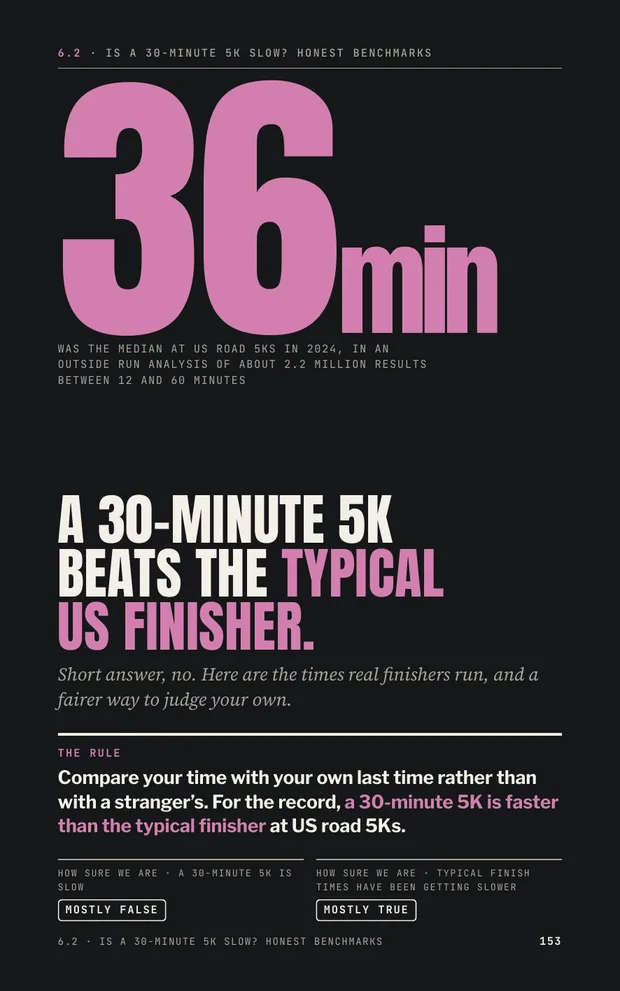
Then you're normal. In a large analysis of US road 5Ks in 2024, the median finish was about 36 minutes, so a 30-minute 5K beats the typical finisher. The book shows the numbers and suggests comparing yourself with your own last run instead.
Not to start. For the first weeks a phone or a timer that beeps for run and walk intervals is enough, and your voice is the effort meter. The book explains when a watch helps and how far to trust it.
No. It's general information for adults who are generally healthy, including people who are heavier, older or returning after a break. It doesn't replace a doctor or physiotherapist who can examine you. The book opens with a two-minute health check and has a Medical tent with clear signs for when to stop and get help.
A PDF you download right after checkout, made to read on a phone, tablet or computer. The Kit bag cards and plans are made to print. Your copy carries your purchase details, and updates come free by email.
You don't need to be a runner to start. You need comfortable shoes, about 30 minutes, and a route that tells you what to do today and what to do when something aches.
19 USD launch price · 30-day refund · free updates
Get the book - 19 USDP.S. The first session in the book is one minute of slow running and a minute and a half of walking. If that sounds almost too easy, it's meant to.